
Stakeholders in Nigeria’s electoral, security, media and civil society sectors have called for stronger collaboration, proactive communication and responsible use of artificial intelligence to combat misinformation and safeguard public trust ahead of the 2027 general elections.
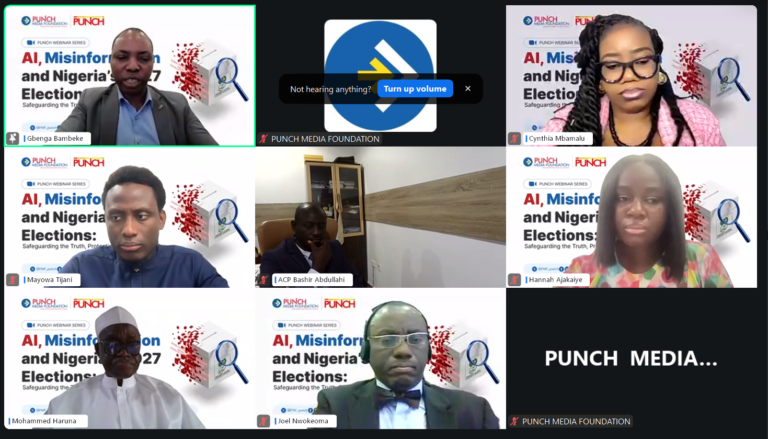
The call was made at a webinar organised by PUNCH Media Foundation as part of its PUNCH Webinar Series, a platform for discussions on critical societal issues.
The webinar, themed “AI, Misinformation and Nigeria’s 2027 Elections: Safeguarding the Truth, Protecting the Vote,” examined the growing influence of emerging technologies on the electoral information environment, the risks posed by manipulated content and the measures required to protect electoral integrity.
Moderated by the Metro Editor of PUNCH Newspapers, Joel Nwokeoma, the session featured the National Commissioner of the Independent National Electoral Commission and Chairman of its Information and Voter Education Committee, Mohammed Haruna; Director of Programmes, Yiaga Africa, Cynthia Mbamalu; Director of Projects, Cable Newspaper Journalism Foundation, Mayowa Tijani; and Founder, FactsMatterNG, Hannah Ajakaiye.
The Inspector-General of Police, IGP Olatunji Rilwan Disu, was represented by ACP Bashir Abdullahi.
Speaking on INEC’s preparedness, Haruna disclosed that the Commission had established an internal strategic response group involving relevant departments to monitor and address misinformation ahead of the elections.
He explained that the Commission was strengthening its communication systems, monitoring the media environment and engaging external stakeholders to ensure the timely dissemination of accurate electoral information.
According to him, INEC had also conducted simulations to test its response capacity, with officials responding to a false-information scenario within three to four minutes.
While acknowledging these efforts, Haruna identified deliberate disinformation as a major challenge, underscoring the need for sustained vigilance and coordinated responses.
Representing the Inspector-General of Police, Abdullahi highlighted the role of the Nigeria Police Force National Cybercrime Centre in tackling technology-enabled threats through cyber intelligence, digital forensics and the identification of coordinated malicious networks.
He explained that the Centre works with technology platforms, including Meta and TikTok, on content attribution, takedowns and evidence preservation, and cited efforts to disrupt phone farms used to amplify misleading information.
Abdullahi, however, stressed that investigations and enforcement must be guided by the law, with due regard for freedom of expression and the safety of journalists.
Also speaking, Mbamalu warned that misinformation could erode public confidence in electoral institutions and discourage citizens from participating in elections.
“Trust is the currency for electoral participation,” she said.
She urged INEC and other relevant institutions to adopt more proactive communication approaches, arguing that anticipating and addressing false narratives before they spread would be more effective than relying solely on debunking misinformation after it had gained traction.
Mbamalu also advocated scenario planning, improved digital literacy and stronger collaboration among electoral institutions, civil society, media organisations and citizens.
On the media’s responsibility, Tijani emphasised the need for newsrooms to establish clear policies governing the adoption and use of artificial intelligence.
He urged media organisations to communicate these standards transparently to their audiences, noting that while AI could improve newsroom efficiency, it should not replace professional judgement and editorial accountability.
“As long as there is a human in the loop exercising editorial judgement, I believe many of the risks associated with the use of AI can be mitigated,” he said.
Similarly, Ajakaiye drew attention to the increasing sophistication of synthetic media, manipulated images and videos, and cloned voices, warning that such content could make it more difficult for the public to distinguish authentic information from fabricated material.
She urged journalists and citizens to exercise caution, particularly when confronted with sensational or time-sensitive content, and to verify the source, context and authenticity of information before sharing it.
Ajakaiye also called for media literacy initiatives that reach audiences in local languages and through trusted community voices.
“It’s better to wait than to damage your reputation,” she cautioned, emphasising the importance of verification over speed.
In his vote of thanks, the Head of Human Resources, Finance and Administration at PUNCH Nigeria Limited, Mr Gbenga Bambeke, disclosed that the company and PUNCH Media Foundation had developed general AI and editorial AI policies to guide the responsible use of the technology, particularly in journalism.
He explained that the policies reinforce the organisations’ commitment to accuracy, fairness, transparency, accountability and editorial integrity.
The webinar highlighted the need for a coordinated approach to protecting Nigeria’s electoral information environment, with participants emphasising that no single institution could effectively address the challenges posed by AI-driven misinformation.
The discussions also reinforced the importance of timely official communication, responsible journalism, stronger verification practices, digital literacy and public awareness in safeguarding electoral integrity.
As preparations for the 2027 elections continue, sustained cooperation among electoral institutions, security agencies, media organisations, civil society, technology platforms and citizens will be critical to ensuring that false and manipulated information does not undermine public trust and informed electoral participation.