

Deepfake videos and audio are emerging as a major concern in the fight against election misinformation, while a significant proportion of Nigerians say they have encountered false information about politicians and elections on social media.
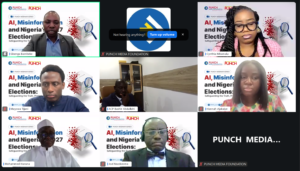
This was one of the key insights from a series of opinion polls conducted ahead of the panel discussion at the recently concluded PUNCH Webinar Series, organised by PUNCH Media Foundation (PMF), with the theme, AI, Misinformation and Nigeria’s 2027 Elections: Safeguarding the Truth, Protecting the Vote.
When asked which form of AI-enabled disinformation poses the greatest risk to election trust, 38.5 per cent of participants identified deepfake videos and audio as the biggest threat. AI-generated fake news followed with 20.5 per cent, while 23.1 per cent pointed to AI-powered targeted misinformation. Manipulated images and campaign materials accounted for 10.3 per cent, while 7.7 per cent identified fake social media accounts and bots.
The findings highlight growing concerns about the ability of artificial intelligence to create convincing but misleading content, particularly audio and video materials that can make it difficult for people to distinguish fact from fabrication.
The second poll revealed how widespread exposure to election-related misinformation appears to be. More than three-quarters (76.9 per cent) of participants said they had encountered false information about a politician or election on social media, with 61.5 per cent reporting that they had seen such content many times and 15.4 per cent saying they had encountered it once or twice.
While 15.4 per cent were unsure whether information they had encountered was false, only 7.7 per cent said they had never come across such content.
This suggests that election misinformation is not merely a potential threat but an existing challenge in Nigeria’s digital information space. It also raises questions about how effectively citizens can identify misleading content and where they turn to verify information.
Interestingly, responses to the third poll offered some encouragement about people’s willingness to verify information before sharing it.
Asked what they would do first after encountering a shocking election story on WhatsApp, Facebook or TikTok, an overwhelming 89.5 per cent said they would check whether a trusted news source had reported it. Another 7.9 per cent said they would ignore the information, while 2.6 per cent would ask friends or family whether it was true. None of the participants selected the option of sharing the story immediately.
Although these responses reflect positive verification intentions, they also underline the importance of ensuring that credible news sources remain accessible, responsive and trusted. The ability to verify information depends not only on citizens’ willingness to check claims but also on the availability of reliable information.
The fourth poll examined where Nigerians are most likely to encounter false election information. A combined 39.5 per cent identified Facebook, TikTok, X and other social media platforms as the most likely sources, while 21.1 per cent pointed to WhatsApp and other messaging applications.
However, the largest proportion, 39.5 per cent, believed false election information could be encountered across all the listed channels, including online news websites, blogs, radio, television and word of mouth. Only 2.6 per cent identified radio, television or word of mouth alone, while another 2.6 per cent selected online news websites and blogs.
The responses suggest that election misinformation should not be treated as a social media problem alone. False claims can travel across different channels, moving from private messaging groups to public platforms and even traditional media conversations.
What the findings mean for Nigeria’s 2027 elections
Taken together, the poll results offer important lessons for stakeholders as the 2027 general elections approach.
First, the concerns surrounding deepfakes reinforce the need for media organisations, technology platforms, and election management bodies to strengthen their capacity to identify, investigate and respond to manipulated audio and video content.
Second, the high level of reported exposure to false election information makes digital and media literacy particularly important. Citizens need practical skills to question suspicious content, verify sources and avoid sharing unconfirmed claims.
Third, the strong preference for checking trusted news sources presents an opportunity for credible media organisations to strengthen public confidence through timely, accurate and transparent reporting. Newsrooms must also be prepared to explain how they use artificial intelligence and the safeguards they have in place to protect editorial integrity.
Finally, the belief that misinformation can emerge across multiple channels calls for a coordinated response involving the Independent National Electoral Commission (INEC), media organisations, civil society groups, technology companies, security agencies and citizens.
While the polls are not a nationally representative survey, they offer useful insights into participants’ perceptions, experiences and intentions regarding election misinformation.
As Nigeria approaches another election cycle, the challenge will be to translate the willingness to verify information into consistent action and ensure that credible information reaches citizens before false claims gain ground.
The central lesson is clear: protecting election trust in the age of artificial intelligence requires more than identifying fake content. It demands stronger institutions, responsible journalism, informed citizens and a shared commitment to safeguarding the truth.