
 | WEEKLY EDITION Issue 004 23 November 2026 |
Ten things in AI worth your time. |
IN LAST WEEK’S POLL, WE ASKED: Before a school introduces an AI study assistant, which safeguard
should it prioritise?  01 The Big Story AI & public finance Can AI spot suspicious trade deals—and who checks the alerts?Nigeria is planning smarter trade monitoring. What comes after an alert? Nigeria’s revenue authorities are developing AI-assisted trade analytics to identify unusual import and export transactions, according to PUNCH. A proposed early-warning system could help detect illicit financial flows, while a joint task force involving revenue, customs and financial intelligence officials is still only a proposal. For importers, businesses and taxpayers, the questions are practical: what information will be checked, who reviews a flagged transaction, and how can a business challenge a mistake? |
 Duration: 00:01:49 02 The Watch Robots & invisible workers How “autonomous” are the robots around us?A 1-minute-49-second video on the human help behind some machines. Driverless taxis, shelf-stacking robots and home assistants can look as though they operate entirely on their own. This short Deutsche Welle video explains how some still rely on human operators behind the scenes. The distinction matters when businesses promise machines that need little supervision. The point is not that every robot is secretly remote-controlled, but that claims of autonomy should be specific: when does a person step in, and who is responsible when something goes wrong? |
THE PAIR CHECK When a company calls a robot “autonomous”, ask: Which tasks can it complete alone? When does a human step in? Who is accountable for errors? |
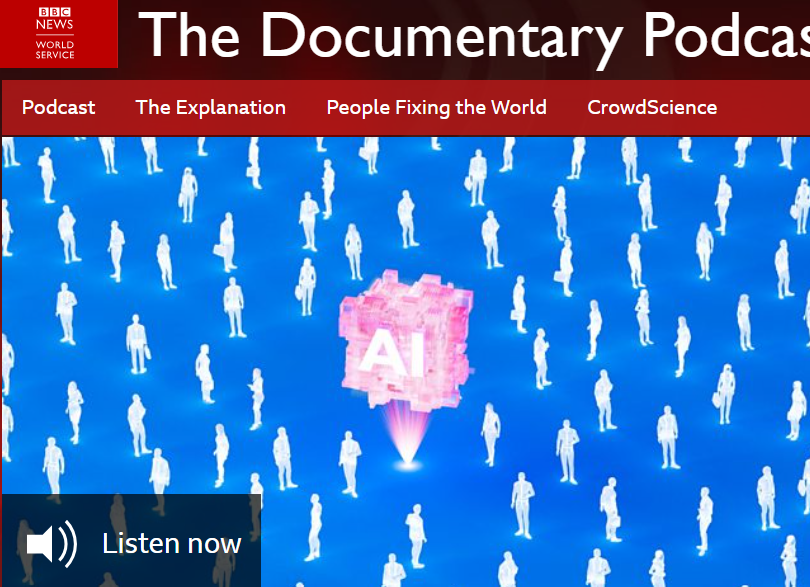 Duration: 00:24:00 03 The Listen Trust at work When AI invents an answer, who is responsible?A BBC podcast explores why businesses cannot treat confident AI output as fact. Artificial intelligence can produce a convincing answer that is simply wrong. In this 24-minute episode of The Documentary Podcast, the BBC explores AI “hallucinations” and the challenges they create for businesses, including law firms and consultancies. For Nigerians using AI to draft reports, proposals or client documents, the practical question is where people should verify facts, figures and references before anyone acts on the result. AI may speed up a task, but professional responsibility does not disappear. |
 04 The Read AI accusations & fair evidence A prize-winning writer was accused of using AI. What cleared him?The Caine Prize case shows why proof matters before public accusation. Zimbabwean writer Simbarashe Steyn Kundizeza faced claims that his
Caine Prize-winning story, The Blue Fighter, had been produced using generative
AI. After speaking with the writer and others involved and examining drafts and
metadata, the prize’s trustees said they found no evidence of AI authorship and
upheld his £10,000 award. For teachers, editors and writers, the lesson is not
that AI misuse never happens. It is that an automated detection score alone is
a poor substitute for a fair, evidence-led review. |
 05 The Evidence Student essays & proof Did 40% of competition essays use AI? Not quite what the report proves.Judges reported warning signs—but suspicion is not confirmation. Judges of the 2026 UBA
Foundation National Essay Competition estimated that 35–40% of entries
displayed writing patterns they associated with generative AI, including
repetitive expressions and generic examples. They reviewed thousands of essays,
but this estimate describes signs noticed by the judges—not a verified count of
essays actually written using AI. Public reports provide some judging criteria,
while the full basis for the AI estimate still needs scrutiny. For schools,
unusual writing should prompt fair questions, not an automatic accusation. |
If AI helps flag suspicious trade transactions, which safeguard would you want explained first?
Choose one answer. Your vote is submitted here without leaving the page.
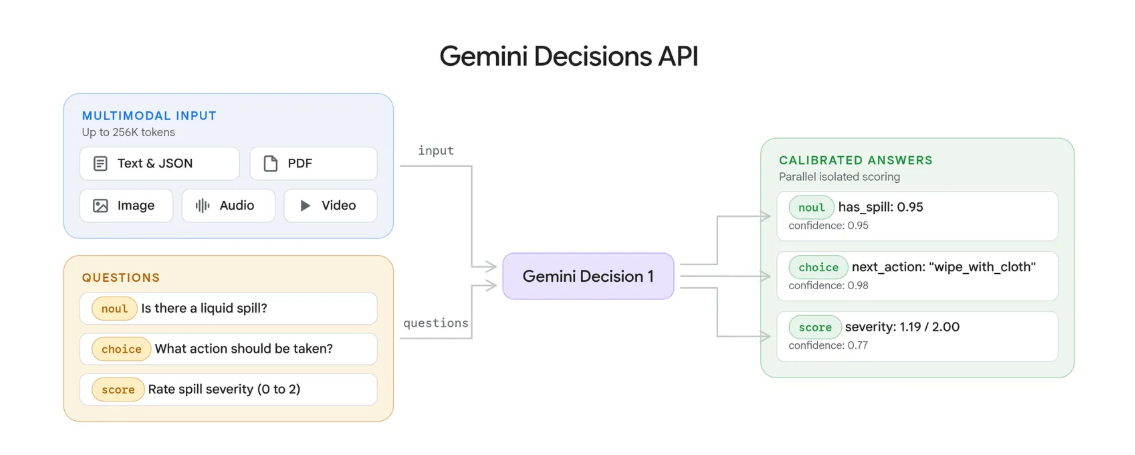 06 The Tool Decisions for developers Google has a new AI tool for quick decisions. How should teams test it?A technical API, not a chatbot for everyday users. Google has introduced the Gemini Decisions API, a developer tool designed to score predefined choices across text, images, audio, video and documents. The company says one request can evaluate up to 1,000 questions. Developers could explore it for tasks such as routing support requests or checking simple rules, but speed and confidence scores are not the same as correctness. Before deploying it, teams should test anonymised examples against human-reviewed answers and inspect data handling, access and costs. PAIR has not independently tested the tool. |
 07 The Life Yoruba storytelling A Yoruba AI-assisted film is reaching new audiences abroadWhat happens when a local-language story travels through new technology? Nigerian studio Mysterious Tech Studios says its Yoruba-language film Asiri Ilu Awon Osu (Mystery of Osu Land) is expanding to the US-based AfrolandTV platform after an earlier release on Docuth. The studio has also acknowledged viewing difficulties during its premiere and says access has improved. Its claimed Guinness World Records milestone has not been certified, according to PUNCH. Beyond the technology, this is a reminder that local-language storytelling can find wider audiences—but viewing access, creators’ contributions and big promotional claims deserve careful checking. |
THE PAIR HABIT Before sharing an AI-made film or image, check who created it, what AI contributed, and whether claimed awards or records are independently verified. |
 08 The Initiative Emergency response Can AI help Lagos emergency officers report incidents faster?Training is a beginning—not evidence that response times have improved. The Lagos State Emergency Management Agency has introduced officers to AI tools for drafting incident reports, analysing information and communicating during emergencies, according to PUNCH. Faster documentation could be valuable in a city where clear information matters, but the report describes training and exploration—not a system proven to be in everyday use. Before judging the initiative’s impact, residents should be able to ask which tools are deployed, how sensitive incident details are protected and whether any pilot improves accuracy or response times. |
 09 The Opportunity Board Skills & public-service funding Apply for an AI and digital-skills scholarshipNtha Foundation is offering funded online learning to African applicants. The Ntha Foundation is accepting applications from African learners,
including Nigerians, for its 2027 AI and digital-skills scholarship delivered
through Digital Skills for Africa. The award is valued at US$5,000 in eligible
learning access; it is not a cash payment to recipients. Applicants need a free
learner account, and selection is not guaranteed. Applications close on 1
December 2026, with successful learners expected to start in January 2027. ALSO ON THE BOARD AI for city services Could your city partner with an
organisation to improve public services? Cities Deliver offers project grants—but governments cannot apply on their own. The Rockefeller Foundation and OpenAI Foundation’s Cities Deliver programme offers US$500,000–US$2 million in grants for eligible organisations working with city governments on AI-enabled public services. A qualifying lead organisation, such as a nonprofit, must apply with a committed city partner; government bodies cannot apply directly. Projects related to voting or elections are excluded. First-stage submissions close at 11:59 p.m. US Eastern Time on 29 November 2026—5:59 a.m. in Lagos on 30 November. Read the updated FAQs before applying. |
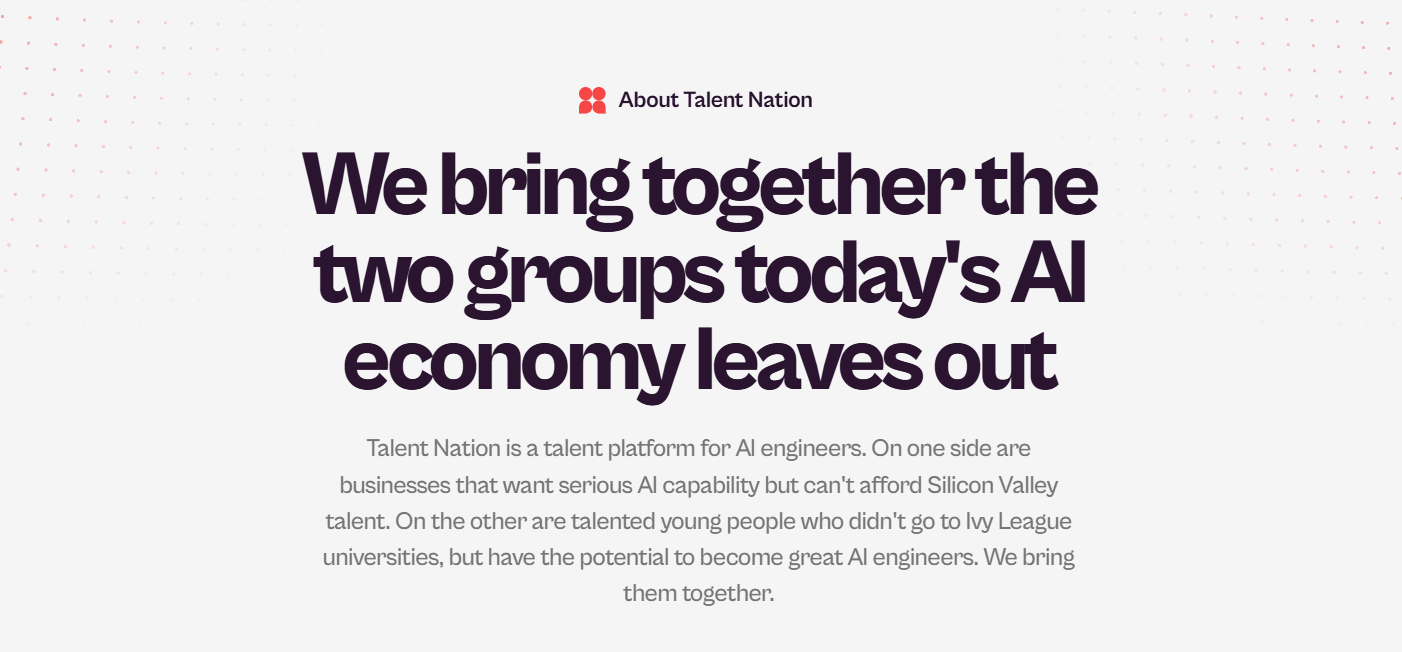 10 The People Building African AI talent Iyinoluwa Aboyeji and Kesiah Valkin want more Africans building AITwo founders bring different careers to a much larger training ambition. Nigerian technology entrepreneur Iyinoluwa Aboyeji, who helped found
Andela and Flutterwave, and Kesiah Valkin, who began her career in corporate
law, are co-founders of Talent Nation. Aboyeji serves as executive chairman and
Valkin as chief executive. Through Learn2Earn, the organisation says it
develops and places AI engineers with companies. Its ambition to train and
place one million African engineers over a decade remains a target, not an
achieved result. For aspiring developers, the questions are practical: what
training is offered, who qualifies and what verified placements follow? |
Published by PUNCH Media Foundation, the development arm of PUNCH, Nigeria’s Most Widely Read Newspaper. PUNCH Place, KM 14 Lagos–Ibadan Expressway, Ogun State, Nigeria. punchfoundation.org · punchng.com |